
University Relations
http://www.umn.edu/urelate
612-624-6868
http://www.umn.edu/urelate
612-624-6868



Governance
Director
Victoria Interrante, PhD
Computer Science & Engineering
Associate Director
Jeanette Gundel, PhD
Professor, Linguistics
Support
The Center's graduate and undergraduate programs of training and research have been supported by a number of agencies, including:
The National Institute of Child Health and Development
NRT-NSF research grants held by CogSci Center faculty
The Center has also received important funding support from University of Minnesota offices, schools and colleges, including:
Office of the Vice President for Research
spring 2019 Colloquia
Monday ,March 25, 3:30 - 5:00pm, Elliott Hall S204
Kara Kedrick (Psychology)
"Tracing the trajectory of curious minds through question asking and information foraging"
by Kara Kedrick and Wilma Koutstaal
Abstract
How does curiosity fuel the process of inquiry? Epistemic curiosity, the intrinsic desire to learn and integrate information, drives humans to develop a deep understanding of their internal and external environments. Yet, little is known about how curiosity guides people to naturalistically inquire about the world. To address this underexamined phenomenon, we employed a novel state curiosity-invoking paradigm (the "Curiosity Question & Answer Task") to trace the interactive information-seeking behavior of a person confronted with implicit information gaps. Using a computerized interface, participants typed questions in response to factual statements that purposively included missing information. Next, they were presented with further topic-related questions for which they had the opportunity to forage for answers. In line with our hypotheses, based on the information-gap theory, we found that individuals who reported higher levels of curiosity about particular facts pursued — through an active process of directed questioning — more detailed and varied gap- and non-gap-related information. These information-seeking behaviors positively correlated with epistemic trait curiosity, openness to experience, and need for complexity and novelty. Curiosity-invoked inquiry also enhanced later incidental memory recall, especially when participants more frequently both generated a question and looked at the answer in the information foraging phase. Collectively these results highlight the power of curiosity in shaping autonomous-information seeking and knowledge acquisition.

Spring Research Day
Friday, April 12th, 2019
9:30 am - 3:00 pm, Walter Library 402, University of Minnesota -TC
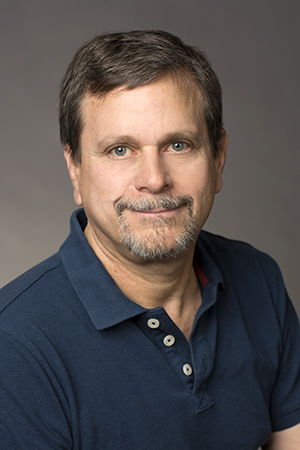 Keynote speaker: Michael A. Webster, University of Nevada, Reno.
"Adaptation and visual experience"
Abstract
The visual system is constantly recalibrating sensitivity and perception in response to the current environment. These adjustments occur at most if not all levels of visual processing and thus strongly impact everything we see. Adaptation adjusts the mind to match the world. This predicts that percepts should diverge when identical observers are placed in different worlds, while visual experiences should converge when different observers are adapted to the same world. I will illustrate these ideas with examples of natural variations in either the environment or the observer. To the extent that we understand how the visual system adapts, images could be processed to instead match the world to fit the mind, obviating the need for observers to adapt. The implications of image adaptation will be illustrated in the context of color vision.
Spring Research Day (SRD) is an annual all-day, university-wide symposium that showcases the work of graduate students. We are inviting non-Center for Cognitive Sciences (CCS) student members to participate in sharing their cognitive science and/or sensory science-related research alongside CCS student members. All University of Minnesota graduate students are invited to submit abstracts for a poster or 20-minute oral presentation.

Breakfast (coffee & pastries) and lunch (sandwiches) will be provided. Student presenters will be invited to attend a dinner with our keynote speaker. If you have any questions, please contact Caitlin Sisk at siskx024@umn.edu or Kristi Oeding at oedi0004@umn.edu. (Poster boards are large enough to accommodate most posters.)
Spring 2019 Course Announcements
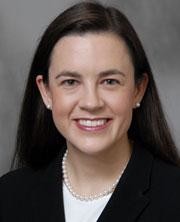
Grand Challenges Course
GCC 5022 The Human Experience of Sensory Loss: Seeking Equitable and Effective Solutions
Instructors: Gordon Legge, Andrew Oxenham, Peggy Nelson, and Meredith Adams
Thursdays from 2:30 – 5:10 p.m
East Bank
Course Description
This course focuses on the visual, auditory and other sensory pathways that convey information about the world to mind and brain. Millions of people worldwide experience deficits in a sensory function that affect their quality of life. We will focus on the characteristics of healthy sensory functioning as well as how sensory disorders can affect personal identity, impede information processing, and alter brain structure and function.
The course will address the demographics and risk factors for sensory disabilities, the implications of these disabilities for activities of daily living, the history of society's response to sensory disability, as well as societal, ethical and personal attitudes toward sensory disabilities. The course will also explore translational and applied approaches for addressing sensory disabilities. Each class session will be co-taught by a pair of instructors, representing multiple scientific and social perspectives. A major goal of the course is to view sensory function and impairment from multiple perspectives — cognitive science, neuroscience, medicine, engineering, society, consumers, ethics and social justice.
The course will combine lectures, discussions, and student-led presentations of research papers. The course will include hands-on demonstrations of assistive technology and panel discussions with people with visual and hearing disabilities. During the semester each student (or pairs of students) will develop a mini research proposal to address a real-world issue related to sensory impairment. The proposal must be translational in nature and must include consultation with consumers of the proposed project. The final class session will be devoted to poster presentations of the mini proposals. The proposal report must include consideration of potentially opposing viewpoints about the proposed research. This course addresses two of our University's grand challenges: Advancing Health Through Tailored Solutions, and Just and Equitable Communities.
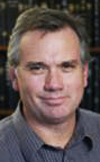
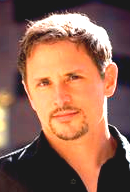
Topics in Computational Vision Deep networks: Behavior, Brain and Theory
Psy 8036 (Kersten) or Psy 5993 Sect. 034 (Schrater)
Instructors: Dan Kersten & Paul Schrater
Tuesday, Jan 22, 3:00 pm
Elliott N227
Course Description
Recent rapid advances in deep learning networks have provided the means to produce “image computable models” of human vision–models that take natural images as input and produce accurate predictions of perceptual decisions. However, the current and future value of deep network research for understanding the brain’s visual system faces both methodological and conceptual challenges. What are the best methods to compare deep networks to perceptual behavior and to the brain? And how can we achieve a conceptual understanding of the networks, to determine which elements are important and which are not? We will read and discuss empirical papers that compare network models of object recognition to behavior and the brain. The seminar will also review work that is helping to understand the space of functions networks can compute, and the limitations on learning to generalize. Finally, we will discuss advances that will be needed to understand the human ability to interpret virtually any image — an ability that spans a wide range of visual tasks. The class format will include short introductory lectures by the instructors to provide historical context and weekly student presentations of current literature. Students will have the opportunity to collaborate on final programming projects. The course will also introduce and use Julia, a rapidly developing language for scientific programming, which is fast, flexible, and relatively easy to learn and use.
For further information contact: Dan Kersten: kersten@umn.edu, or Paul Schrater: schrater@umn.edu
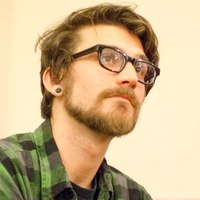 EPSY 5200-001 - Special Topics Psych Foundations: Programming Methods for Psychological Research [3 credits]
Wednesdays, 1:00 - 3:45 p.m.
Instructor: Jeffrey K. Bye
Peik Hall 315
Course Description
This course is fundamentally about how technology can be used by psychological scientists to produce more rigorous and reproducible research. Its goal is to introduce a variety of programming and computer-based methods that are increasingly being used in psychological research. It takes an active learning approach to teaching the programming and computer-based skills that are increasingly important in modern psychological research. The programming languages, platforms, and other technologies covered include Python, PsychoPy, MTurk, the Open Science Framework, R, and RMarkdown. The emphasis is on building readily implementable skills to streamline and automate the research workflow. No prior programming experience is required.
For further information about this course, please contact Dr. Sashank Varma (sashank@umn.edu).
 Ling 8921 – Seminar in Language and Cognition
Tuesdays & Thursdays 1:00 - 2:15pm
Instructor: Jeanette Gundel
Elliott S204
Course Description
Advances in theoretical linguistics have made important contributions to our understanding of what we know when we know a language; but the precise manner in which linguistic knowledge interacts with other cognitive systems when it is put to use in communication is still not well understood. This course will examine this interaction. Questions to be addressed include the following:
How is it that we can understand what other people intend to communicate when they use language, given that the intended meaning is almost always grossly underspecified by the linguistic form alone?How does ‘context’ contribute to the resolution of ambiguities and indeterminacies, and what exactly is ‘context’ from a cognitive perspective?
In addressing these questions, we will also examine the disruption (and non-disruption) of linguistic communication in individuals diagnosed with Autism, Alzheimer’s disease, and Schizophrenia. Other topics may also be covered depending on student interest.
The class meets an elective requirement for a degree in Linguistics as well as for the Cognitive Science graduate major or minor.
Combined lecture and seminar discussion. Weekly reading assignments and comments on readings; final paper/project. Intended audience: graduate students and advanced undergraduates with an interest in language and cognition.
 PHIL 8670 – Seminar in Philosophy of Science
Thursdays, 4 – 6:30 pm
Instructor: Prof. Samuel C. Fletcher
731 Heller Hall
Course Description
This seminar will focus on the historical, mathematical, philosophical, and scientific interconnections between theories of computation and theories of physical phenomena. It will be guided topically by the chapters in the recently published volume, Physical Perspectives on Computation, Computational Perspectives on Physics (Cambridge University Press, 2018). These are divided into four parts:
I. The Computability of Physical Systems and Physical Systems as Computers. Topics include pancomputationalism and variations on the Church-Turing thesis, including historical aspects thereof.
II. The Implementation of Computation in Physical Systems. Topics include explanations of the power of quantum computing, the physics of information, and accounts of physical computational implementation, including in biological systems.
III. Physical Perspectives on Computer Science. Topics include intermediate Turing degrees, how physics has motivated the problems of scientific computing, and the implications of general relativity for theories of computation.
IV. Computational Perspectives on Physical Theory. Topics include the thermodynamics of computation, Landauer's principle, Maxwell's demon, and information-theoretical reconstructions of quantum theory.
For questions or more information, please contact Prof. Fletcher (scfletch@umn.edu).
Ling 1911W – Linguistics and Biology
Fridays 1:15 - 3:45
Instructor: Jeanette Gundel
Elliot S225
Course Description
Connections between linguistics (the scientific study of human language) and biology (the scientific study of life and living forms) have a long history. Most contemporary linguists view language as part of human cognition, rooted in biologically determined predisposition to acquire language and constraints on the properties of what can be acquired. Before the early 1960’s, connection between linguistics and biology was mainly restricted to anatomical properties of the human vocal tract involved in articulation of speech sounds and the role of evolution of the vocal tract in making human language possible. Other connections included metaphorical borrowing of terms from biology, such as ‘genetic’ relationships among related languages grouped into ‘language families’, whose members shared the same ‘ancestor language’. In recent decades, along with emphasis on language as part of human cognition, the focus has turned from the biology of human speech to the biological basis of human language as a system, the existence of ‘language genes’ and connections between evolution of language and evolution of the human brain. There has also been some influence of linguistic methodology on the field of biology, with researchers proposing similarities between generative models of linguistic codes (grammars) and the genetic code. This course examines the relationship between linguistics and biology, and how it reflects development of the field of linguistics and cross-disciplinary influences in general.
 EPSY 8114 – Seminar: Computational Thinking
Instructor: Sashank Varma
Tuesdays, 2:30 - 5:15 PM,
320 Education Sciences Building
Course Description
Computational Thinking (CT) is increasingly important in STEM disciplines and in society more generally. This seminar will review research in this area. It will include work on antecedent topics such as how people understand mathematical symbol systems, engage in logical reasoning, and think with programming languages; on the mental representations and processes underlying key conceMarch 21, 2019sion; and on new instructional approaches for fostering CT skills in children.
Graduate students with an interest in CT are invited to register for the course, regardless of disciplinary background.
For questions or more information, please contact Dr. Sashank Varma (sashank@umn.edu).